Food spoilage is, at its core, the result of rapid microbial growth under favourable conditions. Different food matrices face different threats – some are prone to acid spoilage, others to mould growth, and still others to swelling packages or flavour deterioration.
One of the key advantages of buffered vinegar powder is its relatively broad‑spectrum antimicrobial activity, which covers both bacteria and fungi – the main culprits behind spoilage.
Broad‑Spectrum Coverage: Effective Against Five Major Microbial Categories
Laboratory inhibition tests show that buffered vinegar powder exhibits good inhibitory effects against the following five common food‑related microorganisms:
| Microbial Category | Representative Strain | Characteristics & Risks |
| Gram‑positive bacteria | Bacillus stearothermophilus | Heat‑resistant; often causes acid spoilage |
| Gram‑negative bacteria | Escherichia coli | Common indicator and pathogenic bacterium in food |
| Foodborne pathogens | Listeria monocytogenes | Can grow at low temperatures; high‑risk pathogen |
| Fungi (moulds) | Aspergillus | Mould contamination is a major cause of spoilage |
| Fungi (yeasts) | Yeasts | Cause gas production, package swelling, and off‑flavours |
1. Inhibitory effect of buffered vinegar powder on Bacillus stearothermophilus.
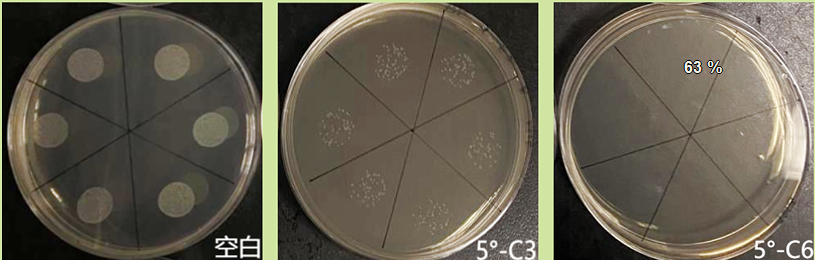
Figure 1: Inhibition rates against Bacillus stearothermophilus without vinegar powder, with 0.10% vinegar powder F5 (C3), and with 0.90% vinegar powder A65 (C6).
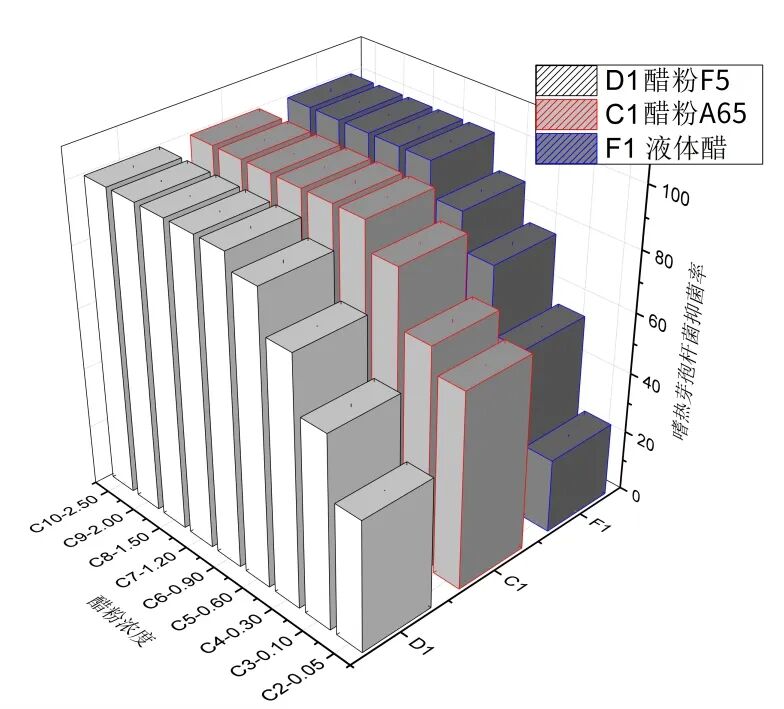
Figure 2: Inhibition rates of different vinegar powder products at various concentrations against Bacillus stearothermophilus.
2.Inhibitory effect of buffered vinegar powder on Escherichia coli.
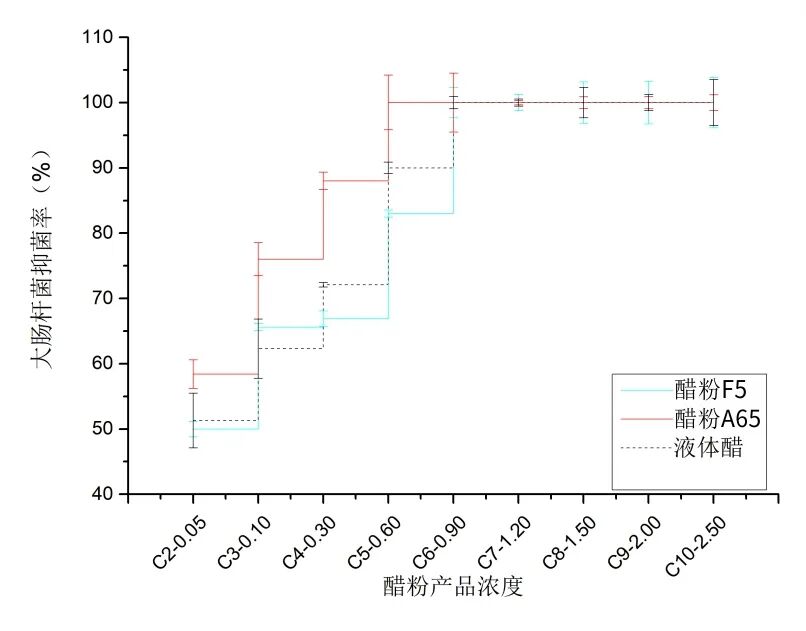
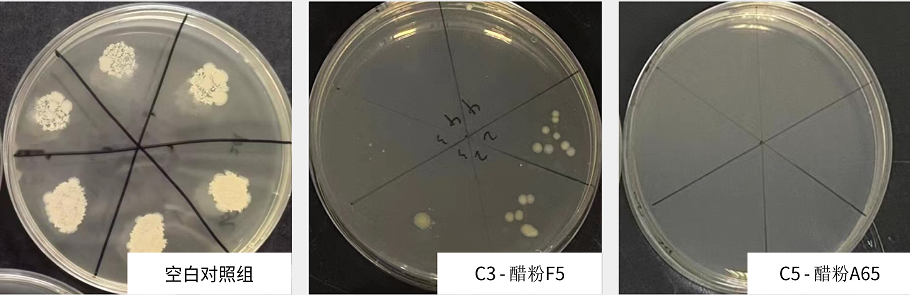
Figures 3 and 4: Bacteriostatic effects of different vinegar powder products against Escherichia coli at various concentrations
3.Inhibitory effect of buffered vinegar powder on Listeria monocytogenes.
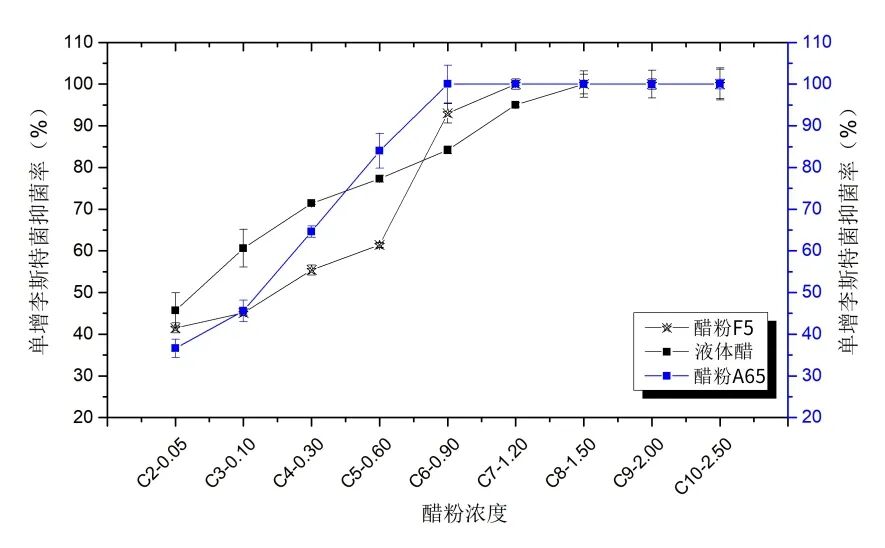
Figure 5: Inhibitory effects of different vinegar powder products against Listeria monocytogenes at various concentrations
4.Inhibitory effect of buffered vinegar powder on Aspergillus.
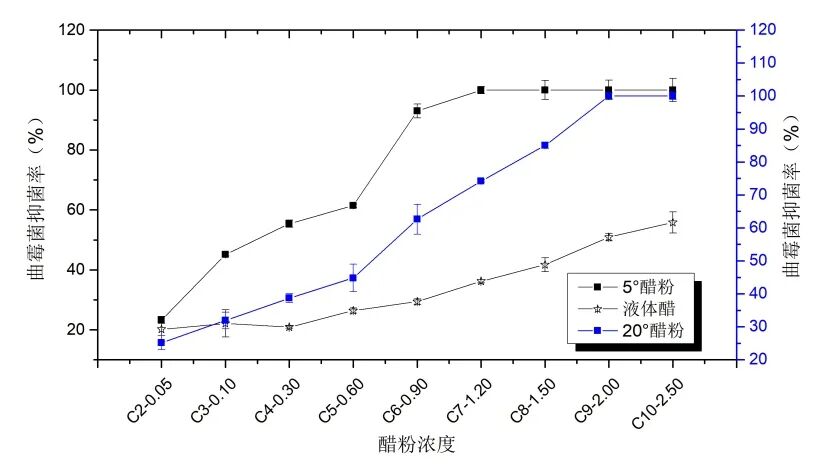
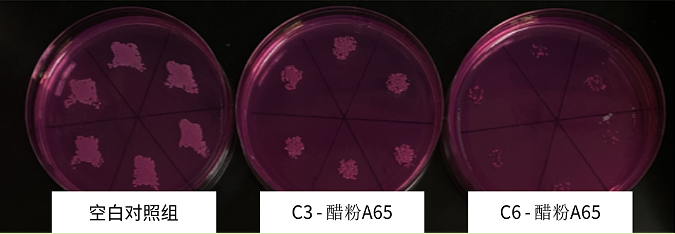
Figures 6 and 7: Inhibition rates of different vinegar powder products at various concentrations against Aspergillus.
5.Inhibitory effect of buffered vinegar powder on yeasts.
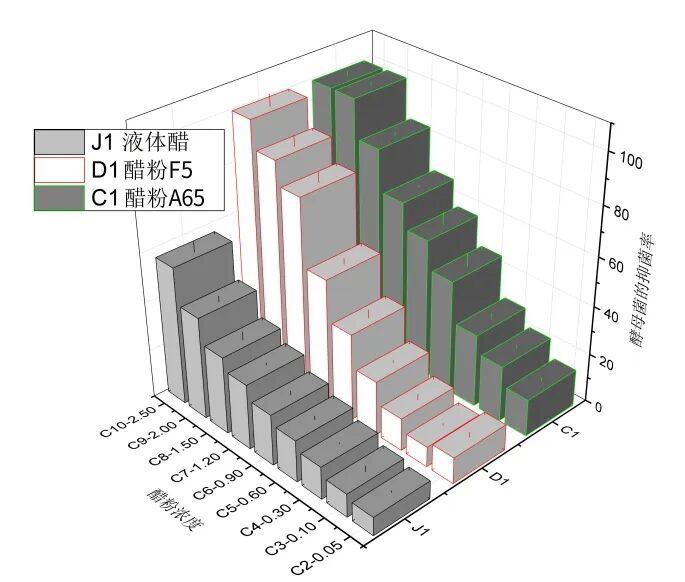
Figure 8: Inhibitory effects of different vinegar powder products against yeasts at various concentrations
Concentration‑Dependent Efficacy: Flexible to Meet Different Shelf‑Life Needs
Test data indicate that the antimicrobial effect of buffered vinegar powder is clearly concentration‑dependent – inhibition rates increase with higher dosages and tend to plateau after reaching a certain level.
– Example with E. coli: at low concentrations, the inhibition rate is around 50–60%; when the concentration reaches approximately 0.6%, the rate exceeds 90%, and remains high with further increases.
– The effective concentration threshold varies slightly among different target microorganisms, allowing manufacturers to adjust the dosage according to the specific spoilage organisms and desired shelf life.
Five Mechanisms Working in Synergy

The broad‑spectrum activity of buffered vinegar powder is attributed to the synergistic action of multiple mechanisms, which also helps minimise the risk of microbial resistance:
1. Competition for energy – Depletes nutrients required for microbial growth.
2. Disruption of the bacterial outer membrane – Damages cell membrane integrity, causing leakage of cellular contents.
3. Increased intracellular osmotic pressure – Induces cell dehydration and suppresses metabolic activity.
4. Inhibition of macromolecular synthesis – Interferes with protein and nucleic acid synthesis, hindering microbial reproduction.
5. Induction of host antimicrobial peptides – Stimulates the food system’s own defensive responses.
Because these mechanisms act together, microbes are less likely to develop resistance, ensuring more stable performance over long‑term use.
Key Application Benefits
– Broad spectrum – Covers both bacteria and fungi, addressing diverse spoilage routes.
– Flexible dosing – Adjustable concentrations to meet different product and shelf‑life requirements.
– Stable performance – Multi‑target action reduces the likelihood of resistance development.
– Natural origin – Derived from fermentation, aligning with clean‑label trends and consumer preference for natural ingredients.
For food systems with complex compositions and multiple potential spoilage pathways, buffered vinegar powder offers a comprehensive, natural preservation option worth considering.
Free
sample

