Solutions

Buffered Vinegar Powder: A Broad‑Spectrum Antimicrobial Solution for Complex Food Systems

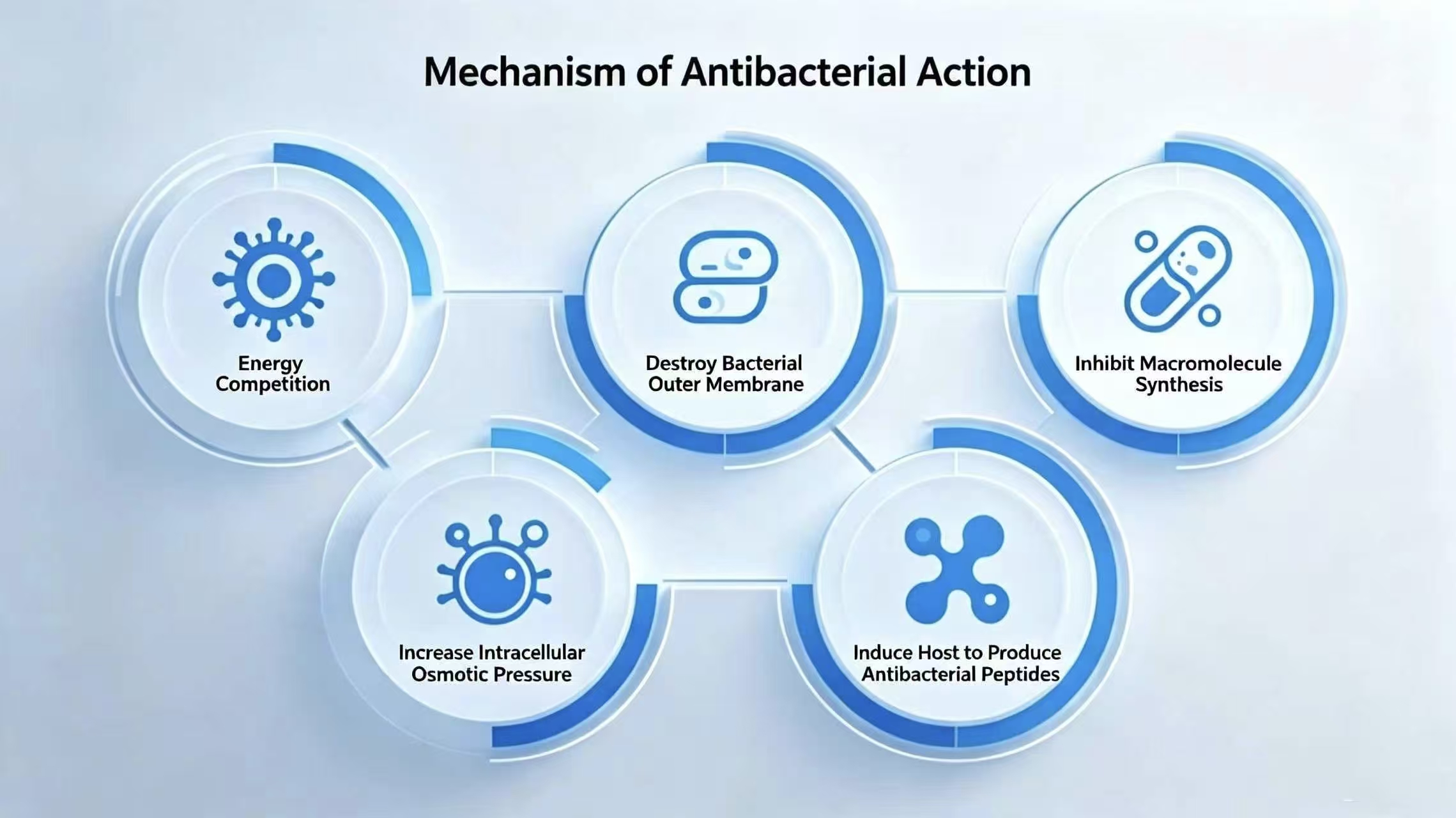
  Food spoilage is, at its core, the result of rapid microbial growth under favourable conditions. Different food matrices face different threats – some are prone to acid spoilage, others to mould growth, and still others to swelling packages or flavour deterioration. One of the key advantages of buffered vinegar powder is its relatively broad‑spectrum antimicrobial activity, which covers both bacteria and fungi – the main culprits behind spoilage.   Broad‑Spectrum Coverage: Effective Against Five Major Microbial Categories Laboratory inhibition tests show that buffered vinegar powder exhibits good inhibitory effects against the following five common food‑related microorganisms: Microbial Category Representative Strain Characteristics & Risks Gram‑positive bacteria Bacillus stearothermophilus Heat‑resistant; often causes acid spoilage Gram‑negative bacteria Escherichia coli Common indicator and pathogenic bacterium in food Foodborne pathogens Listeria monocytogenes Can grow at low temperatures; high‑risk pathogen Fungi (moulds) Aspergillus Mould contamination is a major cause of spoilage Fungi (yeasts) Yeasts Cause gas production, package swelling, and off‑flavours   1. Inhibitory effect of buffered vinegar powder on Bacillus stearothermophilus. Bacillus stearothermophilus* (a Gram‑positive bacterium that commonly causes acid spoilage in food). Cultured at 55 °C ± 1 °C (thermophilic) with shaking at 180 rpm for 10 hours, with an inoculum size of 10³ CFU. Figure 1: Inhibition rates against Bacillus stearothermophilus without...

View More

A Complete Guide to Buffered Vinegar Powder in Baking

The baking industry is rapidly embracing clean labels, and buffered vinegar powder has emerged as a mature alternative to sodium dehydroacetate. This article covers its practical use across breads, cakes, and other baked goods. 1. Bread / Toast – Mold Prevention Without Compromising Structure Bread and toast are the primary applications for buffered vinegar powder in baking. Dosage (based on flour weight): 0.15% – 0.5%. Use the lower end for short‑shelf‑life products (3–7 days) and the higher end for long‑shelf‑life retail items. Whole‑grain and multigrain breads can tolerate slightly more, which also helps mask the bitterness of bran and creates a milder mouthfeel. Incorporation: Dry‑mix with flour, sugar, salt, yeast, and other dry ingredients during dough preparation for even distribution. —————————————————————————————————————————————————————————————————————————————————————————— 2. Frozen Dough / Par‑baked Bread – Solving Thaw‑Induced Mold This is the fastest‑growing application. Frozen dough and par‑baked products are particularly prone to mold and souring during repeated thawing and ambient holding in retail settings. Buffered vinegar powder not only inhibits mold but also protects gluten, reduces freeze‑thaw damage, and does not affect proofing or baking performance. Many chain bakeries have already adopted this solution for their frozen dough lines. Dosage: Follow bread guidelines, adjusting based on actual...

View More

Buffered Vinegar Powder – Go-to Natural Preservative for Prepared Meats, Frozen Fillings, and Braised Meats

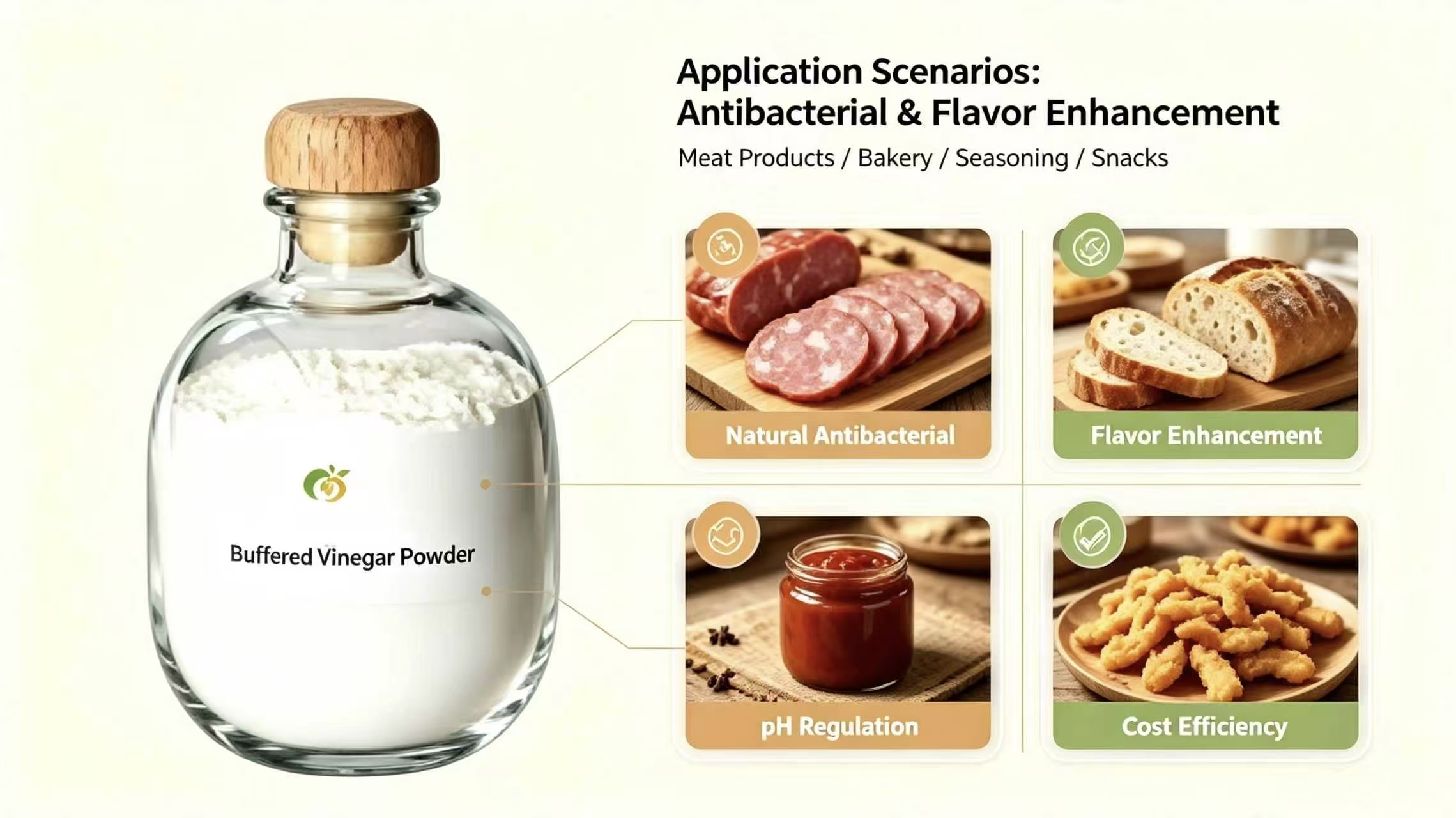
Core Logic of Buffered Vinegar Powder in Meat Preservation   1. Industry Challenges Under the clean‑label trend, chemical preservatives (e.g., sodium benzoate, potassium sorbate) are increasingly restricted or banned, and consumers reject them. Most natural alternatives either lack sufficient antimicrobial power for long shelf life and cold‑chain fluctuations, or they significantly alter the meat’s original flavor.                         2. Unique Advantages of Buffered Vinegar Powder Unlike ordinary vinegar powder, buffered vinegar powder has a mild fermented note, no sharp acidity, and low volatility. It provides long‑lasting antimicrobial action while only removing undesirable odors – without masking meat aroma or leaving a sour aftertaste. Three core functions: – Targeted antimicrobial effect– Effectively inhibits Listeria, Salmonella, spoilage yeasts, lactic acid bacteria, and Bacillus. Its pH‑buffering mechanism ensures stable performance even under cold‑chain variations and repeated freeze‑thaw cycles. – Color and flavor protection – Stabilizes myoglobin to prevent oxidation and discoloration; suppresses bloodiness, gamey notes, stale cold‑storage odors, and rancidity; cuts through greasiness to enhance the meat’s natural savory taste. – Natural compliance – Not a chemical preservative; the ingredient list simply shows “brewed vinegar / vinegar powder”, meeting clean‑label standards for retail,...

View More

Buffered Vinegar Powder | Acetate System | Bacterial Control | Clean Label

Pre-Notes on Key Terms: 1. Acetic acid‑acetate conjugate fermentation system (core term) A buffered balance system made of acetic acid (the molecular antibacterial ingredient) and acetate buffering components. It slowly releases undissociated acetic acid molecules and keeps the product pH stable. Unlike regular vinegar that discharges strong acid all at once, it eliminates harsh sour odor and sharp pH swings. 2.Undissociated acetic acid molecules (active antibacterial ingredient) Fat-soluble acetic acid molecules that stay un-ionized. They can penetrate microbial cell membranes and are the core form of organic acids for antibacterial effects. Once ionized into acetate ions, the antibacterial power almost disappears. 3.Clean Label Compliant with the General Requirements for Clean Label Foods (T/CAPS 064‑2025). It adopts natural fermented raw materials instead of chemically synthesized preservatives, with short, easy-to-read ingredient lists and no artificial synthetic additives.   The global food industry is rapidly shifting to clean label standards. Traditional chemical preservatives like sodium benzoate, potassium sorbate and sodium diacetate are no longer suitable for brands pursuing natural positioning. Conventional vinegar powder on the market relies on high-concentration acetic acid for crude antibacterial performance, with four obvious drawbacks: overly fast acid release, sharp pungent sour taste, unstable finished product pH, and ruined...

View More

Potassium Cinnamate: A Scientifically Proven, Safe Antimicrobial Choice for the Food Industry

Weichuang is a national high-tech enterprise specializing in the production of high-activity Acetobacter fermentation products and strain breeding. Its innovative product, Potassium Cinnamate, is emerging as a natural preservative with reliable antimicrobial activity, offering the food industry a new option for clean-label and sustainable development.   1、Effective Antimicrobial Mechanism   Potassium Cinnamate alters the permeability of microbial cell membranes, causing leakage of intracellular substances, while also disrupting metabolic processes and enzyme activity. Effective concentration against molds: 0.05% – 0.1% Effective concentration against bacteria: 0.01% – 0.1% Target microorganisms: Pseudomonas, Enterobacteriaceae, Lactobacillus, Escherichia coli, Gram-positive and Gram-negative bacilli pH range: Broad efficacy across pH 2 – 7   2、Scientifically Validated Safety   A recent study published in LWT – Food Science and Technology (Vol. 215, 2025) has provided systematic evidence of the safety of Potassium Cinnamate. The research was jointly conducted by the Key Laboratory of Fermentation Engineering, Hubei University of Technology, and the State Key Laboratory of Bioreactor Engineering, East China University of Science and Technology.                                          Key findings include: Minimal hemolysis: At concentrations up to 8 mg/mL, the hemolysis rate for rabbit...

View More

Cultured Sugar — The Natural Biopreservative from Microbial Fermentation

A Green Alternative to Chemical Preservatives Natural, Safe, and Free from Synthetic Additives   What is Cultured Sugar? Cultured Sugar is a label-friendly, natural food ingredient made from corn, food-grade glucose, and yeast extract. It is produced through edible fungal fermentation, resulting in a unique flavor profile. ✅Not intended for direct consumption but designed for use in food processing. Available in two forms: Cultured Sugar Powder (solid) and Cultured Sugar (liquid).   What Can Cultured Sugar Replace? ✅ Preservatives ✅ Flavor enhancers   Advantages of Replacement ♦ Natural & Healthy Derived from natural corn fermentation, cultured sugar contains no synthetic additives, meeting consumer demand for clean-label and health-oriented foods. ♦ Wide Applications A versatile clean-label preservative solution, widely used in processed meat, bakery, seafood, pickles, sauces, dips, condiments, and ready-to-eat foods.   Key Functions in the Food Industry ♦ Preservation & Shelf Life Extension Effectively inhibits harmful bacteria, replacing chemical preservatives and aligning with the global trend toward clean-label and healthy products. ♦ Flavor Enhancement Fermentation produces alcohols, esters, and amino acid derivatives, which contribute distinctive aroma and taste. ♦ Nutritional Enrichment Secondary metabolites such as vitamins and short-chain fatty acids can improve the nutritional profile of foods.   Antimicrobial...

View More
123›››

Free
sample

Home Tel Mail Inquiry